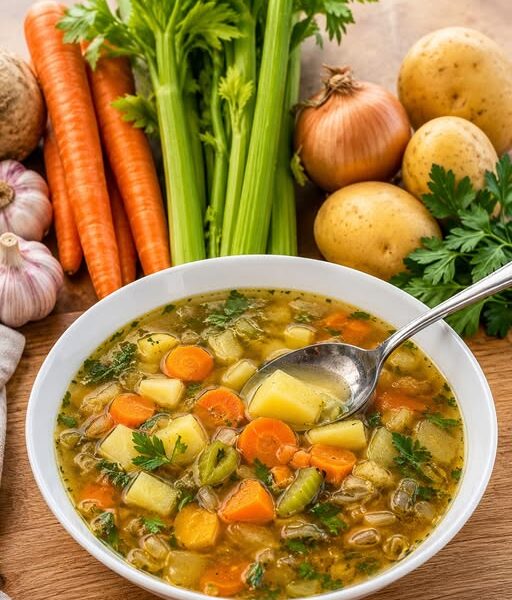
This turmeric vegetable soup is a warm, flavorful dish made with fresh vegetables, aromatic spices, vegetable broth, and a splash of lemon juice. Tender carrots, celery, cauliflower, and cabbage come together in a savory golden broth seasoned with garlic, cumin, paprika, and turmeric.
Everything cooks in one pot, making this recipe simple enough for busy weeknights and convenient for meal preparation. The vegetables soften beautifully while the spices add depth and warmth to every spoonful. Fresh parsley and lemon juice provide a bright finishing touch that balances the rich, savory flavors.
Serve this homemade vegetable soup for lunch or dinner alongside crusty bread, a fresh salad, or your favorite sandwich. It is a versatile recipe that can also be customized with beans, lentils, potatoes, or leafy greens to create a heartier meal.
Recipe Overview
- Prep Time: 15 minutes
- Cook Time: 25 minutes
- Total Time: 40 minutes
- Servings: 6
- Course: Soup, Lunch, or Dinner
- Cuisine: American-inspired
- Difficulty: Easy
- Cooking Method: Stovetop, one pot
Why I Love This Recipe
There are so many reasons to keep this vegetable soup in your regular meal rotation. It combines everyday vegetables with warming spices to create a satisfying homemade meal without complicated cooking techniques.
- Packed with vegetables: Carrots, celery, cauliflower, cabbage, and onions provide a variety of textures and flavors.
- Simple one-pot preparation: Everything cooks in the same pot, which means fewer dishes to wash afterward.
- Full of flavor: Turmeric, cumin, paprika, garlic, and black pepper create a savory, aromatic broth.
- Easy to customize: Add your favorite vegetables, beans, lentils, or grains to make the soup your own.
- Great for meal prep: Make a batch ahead of time for convenient lunches and dinners.
- Naturally vegetarian: Vegetable broth keeps the basic recipe suitable for vegetarian meals when all ingredients are vegetarian.
- Perfect for cooler weather: A warm bowl of vegetable soup is especially comforting on chilly autumn and winter days.
- Finished with fresh lemon: Lemon juice and parsley brighten the flavors just before serving.
What I especially enjoy about this recipe is the balance of tender vegetables, warming spices, and fresh citrus. It tastes comforting without being overly heavy, and it is easy to adapt to whatever vegetables you have available.
Ingredients You’ll Need
Main Ingredients
- 3 tablespoons olive oil: Helps soften the vegetables and carries the flavors of the spices.
- 1 medium onion, diced: Adds a savory foundation to the soup.
- 3 celery stalks, thinly sliced: Provide a subtle, fresh vegetable flavor.
- 4 carrots, peeled and thinly sliced: Add natural sweetness and color.
- 3 cloves garlic, chopped: Bring aromatic depth to the broth.
- 3 cups cauliflower florets: Add a tender texture and mild flavor.
- 3 cups chopped green cabbage: Provide texture and a slightly sweet, savory taste.
- 6 cups vegetable broth: Forms the flavorful liquid base.
Spices and Seasonings
- 1 teaspoon ground turmeric: Gives the broth its distinctive golden color and earthy flavor.
- 1 teaspoon ground cumin: Adds warmth and a savory, slightly nutty aroma.
- ½ teaspoon paprika: Provides a mild peppery depth.
- A pinch of chili flakes, optional: Adds a little heat.
- 1½ teaspoons kosher salt, or to taste: Enhances the overall flavor.
- ½ teaspoon ground black pepper, or to taste: Adds gentle spice.
Fresh Finishing Ingredients
- ¼ cup chopped fresh parsley: Provides a fresh herbal finish.
- Juice of 1 lemon: Adds brightness and balances the savory broth.
Equipment Needed
Before you begin, gather these kitchen essentials:
- A large soup pot or Dutch oven
- A sharp knife
- A cutting board
- Measuring cups and spoons
- A wooden spoon or heat-resistant spatula
- A ladle for serving
How to Make Anti-Inflammatory Vegetable Soup with Turmeric
Follow these straightforward steps to prepare a flavorful pot of homemade vegetable soup.
Step 1: Prepare the Vegetables
Peel and slice the carrots, thinly slice the celery, dice the onion, and chop the garlic. Cut the cauliflower into bite-sized florets and chop the cabbage into manageable pieces.
Try to keep the vegetables relatively similar in size so they cook evenly.
Step 2: Sauté the Onion, Celery, and Carrots
Heat the olive oil in a large soup pot over medium heat.
Add the diced onion, sliced celery, and carrots. Cook for approximately 6–7 minutes, stirring occasionally, until the onion becomes soft and translucent and the vegetables begin to release their aromas.
This step builds a flavorful base for the soup.
Step 3: Add the Garlic, Vegetables, and Spices
Stir in the chopped garlic, cauliflower florets, and cabbage.
Add the turmeric, cumin, paprika, and optional chili flakes. Cook for another 2–3 minutes, stirring regularly so the spices coat the vegetables evenly.
The garlic should become fragrant without browning excessively.
Step 4: Pour in the Vegetable Broth
Add the vegetable broth to the pot and stir well, scraping up any flavorful ingredients from the bottom.
Increase the heat until the liquid reaches a gentle boil, then reduce it to maintain a steady simmer.
Step 5: Simmer Until the Vegetables Are Tender
Cover partially with a lid and simmer for approximately 15–20 minutes.
Check the carrots and cauliflower with a fork. They should be tender but not falling apart, while the cabbage should be softened and well incorporated into the broth.
Cooking time may vary slightly depending on the size of your vegetable pieces.
Step 6: Season the Soup
Add the kosher salt and black pepper. Stir well, then taste the broth.
Adjust the seasonings as needed. If the broth tastes too concentrated, add a little water or extra vegetable broth. If you prefer a stronger flavor, allow the soup to simmer for a few additional minutes.
Step 7: Add Lemon Juice and Parsley
Turn the heat to low and stir in the freshly squeezed lemon juice and chopped parsley.
Allow everything to warm together for another minute or two. Avoid prolonged cooking after adding the parsley so its fresh flavor remains noticeable.
Step 8: Serve Warm
Ladle the soup into bowls and serve immediately.
Garnish with additional parsley or a little freshly ground black pepper if desired. Pair it with crusty bread, garlic toast, or a simple green salad for a satisfying meal.
Tips and Tricks for the Best Vegetable Soup
- Cut vegetables evenly: Similar-sized pieces cook at approximately the same rate.
- Sauté before simmering: Cooking the onion, celery, and carrots in olive oil develops a deeper flavor.
- Bloom the spices: Stirring the spices into the warm vegetables for a couple of minutes helps release their aroma.
- Use good-quality broth: A flavorful vegetable broth makes a noticeable difference in the finished soup.
- Keep the simmer gentle: A gentle simmer helps vegetables become tender without breaking apart too quickly.
- Add lemon at the end: Fresh lemon juice gives the broth a brighter, fresher finish.
- Adjust the thickness: Add extra broth for a lighter soup or simmer uncovered briefly to reduce excess liquid.
- Control the heat: Leave out the chili flakes for a mild version or add a little more for extra spice.
- Taste before serving: Broth brands vary in saltiness, so adjust the seasoning gradually.
- Make it more filling: Add cooked beans, lentils, chicken, or grains if you want a heartier meal.
Easy Ways to Customize This Soup
One of the best features of this recipe is how easily you can adapt it to your preferences or available ingredients.
Add Potatoes
Dice Yukon Gold or red potatoes into small pieces and add them with the cauliflower and cabbage. Simmer until fork-tender. Potatoes create a heartier texture and make the soup more substantial.
Try Sweet Potatoes
Sweet potatoes complement turmeric and cumin while adding natural sweetness. Cut them into small cubes and add them early enough to cook through.
Include Broccoli
Replace some or all of the cauliflower with broccoli florets. Add them during the simmering stage and cook until tender.
Stir in Kale or Spinach
Add thinly sliced kale during the final 5–10 minutes of cooking. Baby spinach can be stirred in near the end and allowed to wilt before serving.
Add Beans or Lentils
Stir in drained, rinsed canned beans or cooked lentils to increase the soup’s heartiness. If using dry lentils, add them earlier and adjust the broth and cooking time according to the type of lentil.
Include Rice, Quinoa, or Pasta
Cooked rice, quinoa, or pasta can be added shortly before serving. For better texture during storage, cook these separately and add them to individual bowls as needed.
Add Chicken
For a nonvegetarian version, add cooked, shredded chicken near the end of cooking and simmer until thoroughly heated.
What to Serve with Turmeric Vegetable Soup
This soup is delicious on its own, but simple sides can turn it into a complete meal.
- Crusty bread: Perfect for dipping into the golden broth.
- Garlic bread: Adds a savory, crunchy contrast to the tender vegetables.
- Whole-grain toast: A simple accompaniment for lunch.
- Fresh green salad: Provides a crisp, refreshing contrast.
- Grilled cheese sandwich: Makes a cozy lunch or dinner.
- Whole-grain crackers: An easy option for a light meal.
- Roasted vegetables: Complement the soup with additional textures and flavors.
For a more filling meal, serve the soup with beans, lentils, or a grain-based side dish.
Storage Instructions
How to Store in the Refrigerator
Allow the soup to cool slightly, then transfer it to clean, shallow, airtight containers. Refrigerate promptly and keep it at 4°C (40°F) or below.
For best quality and food safety, enjoy refrigerated leftovers within 3–4 days.
When ready to eat, reheat only the portion you need until it reaches 74°C (165°F) throughout, stirring to heat evenly.
Can You Freeze Vegetable Soup?
Yes. This soup freezes well, although cabbage and cauliflower may become softer after thawing.
To freeze:
- Allow the soup to cool.
- Divide it into meal-sized portions.
- Transfer to freezer-safe containers, leaving room for expansion.
- Label with the preparation date.
- Freeze at −18°C (0°F) or below.
For the best flavor and texture, use frozen soup within approximately 2–3 months.
How to Reheat Leftovers
On the stovetop: Place the desired portion in a saucepan and warm over medium-low heat, stirring occasionally, until steaming hot throughout.
In the microwave: Transfer the soup to a microwave-safe bowl, cover loosely, and heat in intervals. Stir between intervals to distribute the heat evenly.
If the soup has thickened during storage, add a small splash of water or vegetable broth.
Meal Prep Suggestions
For convenient lunches and dinners, prepare a batch at the beginning of the week and divide it into individual containers.
If you plan to add pasta, rice, or quinoa, store those ingredients separately when possible. This helps prevent them from absorbing too much broth and becoming overly soft.
Frequently Asked Questions
1. Can I Make This Soup Ahead of Time?
Yes. This soup is well suited to meal preparation. Prepare it in advance, refrigerate promptly, and reheat individual portions as needed. The flavors may blend further during storage.
2. Can I Use Frozen Vegetables?
Absolutely. Frozen cauliflower, carrots, or other suitable vegetables can be used. Add them according to their cooking requirements and check for tenderness before serving.
3. Can I Make This Soup Without Turmeric?
Yes. You can omit the turmeric, although the broth will have a different color and flavor. Add a little extra cumin or paprika if desired.
4. How Can I Make the Soup More Filling?
Add cooked beans, lentils, chickpeas, potatoes, quinoa, or shredded chicken. These ingredients make the soup more substantial and can help turn it into a complete meal.
5. Is This Soup Vegan?
The basic recipe is vegan when prepared with vegetable broth and plant-based ingredients. Check the broth label to ensure it contains no animal-derived ingredients.
6. Can I Blend the Soup?
Yes. For a creamier texture, blend part or all of the soup using an immersion blender. If using a countertop blender, allow the soup to cool slightly and blend in batches according to the blender manufacturer’s instructions.
7. Why Add Lemon Juice at the End?
Lemon juice provides a fresh, tangy flavor that balances the earthy spices and sweet vegetables. Adding it near the end helps maintain its bright citrus character.
8. Is This Soup an Anti-Inflammatory Treatment?
No. Although vegetables and spices such as turmeric are studied for their nutritional components, this soup should be enjoyed as food rather than as a treatment for inflammation or any medical condition. A varied diet and appropriate medical care remain important.
Final Thoughts
Anti-Inflammatory Vegetable Soup with Turmeric is a comforting one-pot recipe that brings together colorful vegetables, fragrant spices, and a bright lemon finish. It is simple enough for a busy weeknight yet versatile enough to adapt to different tastes and seasons.
Enjoy it as written, add beans or lentils for extra heartiness, or experiment with your favorite vegetables. With easy preparation, flexible serving options, and convenient storage, this homemade soup is a lovely addition to your regular meal rotation.
Recipe Card: Anti-Inflammatory Vegetable Soup with Turmeric
Description: A hearty vegetable soup featuring carrots, celery, cauliflower, cabbage, garlic, turmeric, cumin, vegetable broth, lemon juice, and parsley.
Prep Time: 15 minutes
Cook Time: 25 minutes
Total Time: 40 minutes
Servings: 6
Difficulty: Easy
Ingredients
- 3 tablespoons olive oil
- 1 medium onion, diced
- 3 celery stalks, thinly sliced
- 4 carrots, peeled and thinly sliced
- 3 cloves garlic, chopped
- 3 cups cauliflower florets
- 3 cups chopped green cabbage
- 1 teaspoon ground turmeric
- 1 teaspoon ground cumin
- ½ teaspoon paprika
- Pinch of chili flakes, optional
- 6 cups vegetable broth
- 1½ teaspoons kosher salt, or to taste
- ½ teaspoon ground black pepper, or to taste
- ¼ cup chopped fresh parsley
- Juice of 1 lemon
Instructions
- Heat the olive oil in a large soup pot over medium heat.
- Add the onion, celery, and carrots. Cook for 6–7 minutes until softened.
- Stir in the garlic, cauliflower, cabbage, turmeric, cumin, paprika, and optional chili flakes. Cook for 2–3 minutes.
- Pour in the vegetable broth and bring to a gentle boil.
- Reduce the heat and simmer for 15–20 minutes until the vegetables are tender.
- Season with salt and black pepper to taste.
- Stir in the lemon juice and parsley.
- Simmer for another minute or two, then ladle into bowls and serve warm.
Storage
Refrigerate leftovers promptly in airtight containers for 3–4 days. Freeze in suitable containers for approximately 2–3 months for the best quality. Reheat thoroughly before serving.