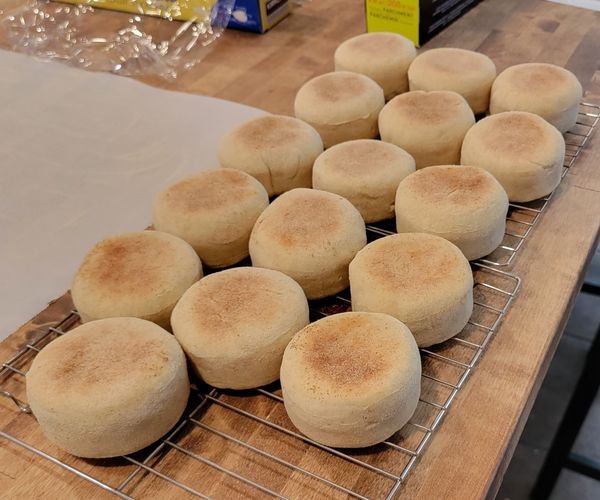
There is nothing quite like freshly made sourdough English muffins straight from your own kitchen. These homemade muffins have a deliciously tangy flavor, golden-brown outsides, and soft, chewy centers filled with those signature nooks and crannies that hold melted butter and jam perfectly.
Made with an active sourdough starter and fermented overnight, this recipe develops wonderful flavor without requiring an oven. Instead, the muffins are cooked right on the stovetop in a skillet, making them a convenient option for homemade bread lovers.
Whether you enjoy them toasted for breakfast, use them for breakfast sandwiches, or serve them with butter and jam, these sourdough English muffins are a delicious addition to your baking routine.
Why I Love This Sourdough English Muffin Recipe
- Wonderful sourdough flavor: Overnight fermentation creates a delicious tangy taste that makes these muffins special.
- No oven required: They cook directly in a skillet, making this recipe easy to prepare without baking equipment.
- Soft and chewy texture: Each muffin has a tender interior and a lightly crisp, golden exterior.
- Perfect for meal prep: Make a batch ahead of time and keep them ready for quick breakfasts and snacks.
- Simple ingredients: The recipe uses basic pantry staples along with sourdough starter.
- Versatile serving options: Enjoy them with sweet toppings, savory fillings, or as a base for homemade mini pizzas.
What Are Sourdough English Muffins?
Sourdough English muffins are small, round breads made with sourdough starter and cooked on a stovetop rather than baked in an oven. Their signature texture comes from fermentation, gentle shaping, and covered skillet cooking.
The outside becomes beautifully golden while the inside stays soft and airy. When split open with a fork and toasted, the muffins develop the classic nooks and crannies that make them perfect for holding butter, jam, honey, and other toppings.
Sourdough English Muffin Ingredients
Yield: 12 muffins
Prep time: 15 minutes
Cooking time: Approximately 15 minutes listed in the recipe card; actual batch time may vary
Fermentation time: Approximately 12 hours
Total time: Approximately 12 hours 30 minutes
Ingredients
- 2½ cups all-purpose flour
- 1 cup water
- ½ cup active sourdough starter
- 1 tablespoon honey
- 1 teaspoon salt
- 1 teaspoon baking soda (optional)
- Coconut oil, for greasing the skillet
Equipment Needed
- Large glass mixing bowl
- Kitchen towel or plastic wrap
- Measuring cups and spoons
- Rubber spatula or mixing spoon
- Cast iron skillet or heavy-bottomed frying pan
- Skillet lid
- Kitchen scale (optional)
- Cooling rack
How to Make Sourdough English Muffins
Step 1: Prepare the Sourdough Dough
In a large glass mixing bowl, combine the all-purpose flour, water, and active sourdough starter.
Mix until the ingredients form a rough, evenly combined dough. Cover the bowl with a clean kitchen towel or plastic wrap.
Step 2: Allow the Dough to Ferment Overnight
Leave the covered dough at room temperature for approximately 8–12 hours, or until it becomes bubbly and noticeably expanded.
The fermentation time depends on your kitchen temperature and the activity of your starter. A warmer kitchen may speed up fermentation, while a cooler environment may require additional time.
By the next morning, the dough should have a pleasant sourdough aroma and visible signs of fermentation.
Step 3: Add the Remaining Ingredients
Once fermentation is complete, add the honey, salt, and optional baking soda to the dough.
Mix gently until everything is incorporated. If the dough feels too sticky to handle, add a little extra flour, one tablespoon at a time, until it becomes easier to shape.
The dough should remain soft and pliable rather than stiff or dry.
Step 4: Prepare the Skillet
Preheat a cast iron skillet or heavy-bottomed frying pan over medium-high heat.
Add a small amount of coconut oil to lightly grease the cooking surface.
Once the skillet is hot, reduce the heat to medium-low before adding the muffins. This helps prevent the outside from browning too quickly while the centers remain undercooked.
Step 5: Divide and Shape the Muffins
Divide the dough into 12 equal portions.
Shape each portion into a round ball, then gently flatten it into a disk approximately ½ inch thick.
Lightly flour your hands if the dough feels sticky, but avoid adding too much extra flour.
Step 6: Cook the Muffins
Arrange the shaped muffins in the greased skillet, leaving enough space between them for expansion.
Cover the skillet with a lid to trap heat and steam. Cook over medium-low heat until the muffins have puffed up and the bottoms are golden brown.
The source recipe describes approximately 10–15 minutes for this stage, although the exact time will depend on the skillet and stovetop.
Step 7: Flip and Finish Cooking
Carefully flip each muffin using a spatula.
Cover the skillet again and cook the other side until golden brown and the muffins feel firm when gently pressed.
Keep the heat moderate so the centers have enough time to cook without burning the outsides.
Step 8: Cool and Serve
Transfer the cooked muffins to a cooling rack and allow them to cool before slicing.
For the classic English muffin texture, split each muffin open using a fork rather than cutting straight through with a knife.
Toast lightly and serve with butter, jam, honey, or your favorite toppings.
Tips and Tricks for Perfect Sourdough English Muffins
- Use an active starter: Your starter should be bubbly and have doubled in size after feeding for reliable fermentation.
- Plan ahead: Prepare the dough the evening before so it has enough time to ferment overnight.
- Adjust fermentation for temperature: Warm kitchens speed up fermentation, while cooler kitchens may require more time.
- Choose your liquid: Water produces a lighter, more traditional texture, while milk can create a richer, softer crumb. The provided recipe uses water.
- Adjust flour gradually: Different flour brands and kitchen humidity levels affect dough consistency. Add extra flour one tablespoon at a time if necessary.
- Do not make the dough too stiff: Too much flour can produce dry, dense muffins.
- Use baking soda carefully: It is optional and helps neutralize some sourdough acidity while providing additional lift.
- Control the skillet temperature: Medium-low heat helps the muffins cook through without burning.
- Keep the skillet covered: The lid traps heat and steam, helping the muffins cook more evenly.
- Shape gently: Handle the dough carefully to preserve the air bubbles created during fermentation.
- Split with a fork: Fork-splitting helps create the traditional nooks and crannies that hold butter and jam.
Choosing Between Water and Milk
This recipe uses water, but milk can be an alternative if you prefer a richer flavor.
Using water: Creates a lighter muffin with a more pronounced sourdough character.
Using milk: Produces a slightly richer flavor and softer crumb. Whole milk is a good option.
You can experiment with either liquid to find the texture and flavor your family enjoys most.
Why Is Baking Soda Used?
Baking soda is listed as an optional ingredient in this recipe.
It reacts with the acidity in fermented sourdough dough, helping to mellow its tangy flavor. It can also provide additional lift and contribute to a lighter texture.
Mix it into the fermented dough just before shaping and cooking the muffins.
Common Sourdough English Muffin Problems and Solutions
Why Are My English Muffins Dense?
Dense muffins can result from an inactive starter, insufficient fermentation, or dough that is too stiff. Make sure your starter is active and allow enough time for the dough to ferment.
Why Are the Bottoms Burning?
The skillet temperature may be too high. Reduce the heat to medium-low and allow the muffins to cook more gradually.
Why Are My Muffins Not Rising in the Skillet?
Make sure the skillet is covered during cooking so heat and steam can circulate. Also check that the dough has fermented properly before shaping.
Why Are the Centers Still Doughy?
The outside may be cooking too quickly. Lower the heat and allow the muffins to cook longer so the centers have time to become fully cooked.
Why Is My Dough Too Sticky?
Flour absorption and kitchen humidity can affect the dough. Add a little extra flour gradually until it becomes manageable, but avoid adding too much.
Delicious Ways to Serve Sourdough English Muffins
These homemade muffins are incredibly versatile and can be enjoyed throughout the day.
Try serving them with:
- Butter and homemade jam
- Honey or maple syrup
- Peanut butter or almond butter
- Scrambled eggs and cheese
- Bacon and breakfast sausage
- Avocado and sliced tomatoes
- Cream cheese
- Fresh fruit and preserves
You can also use them to make breakfast sandwiches, mini pizzas, burgers, or savory lunch sandwiches.
Easy Sourdough English Muffin Variations
Cinnamon Raisin English Muffins
Add cinnamon and raisins to the dough for a sweet breakfast variation. These are especially delicious toasted with butter.
Herb Sourdough English Muffins
Mix in rosemary, thyme, or other favorite herbs for a savory flavor that pairs well with eggs, cheese, and sandwiches.
Whole Wheat English Muffins
Replace part of the all-purpose flour with whole wheat flour for a heartier texture and additional fiber. You may need to adjust the liquid slightly depending on the flour.
Seeded English Muffins
Sprinkle sesame, poppy, or flax seeds over the shaped muffins before cooking for extra texture and flavor.
Storage Instructions
At room temperature: Allow the muffins to cool completely before placing them in an airtight container or resealable bag. They keep for several days at room temperature.
In the refrigerator: Refrigeration is not necessary for short-term storage if the muffins are kept properly sealed. If you choose to refrigerate them, store them in an airtight container to prevent drying out.
In the freezer: For longer storage, freeze the completely cooled muffins for up to 3 months. Place parchment paper between layers to prevent them from sticking together.
To reheat: Thaw frozen muffins at room temperature or toast them directly from frozen. Split them with a fork before toasting for the best texture.
Frequently Asked Questions
Can I Make Sourdough English Muffins Without an Oven?
Yes! One of the best things about this recipe is that the muffins cook on the stovetop in a regular skillet. You do not need an oven.
Do I Need Active Sourdough Starter?
The recipe calls for ½ cup of active sourdough starter. A healthy, bubbly starter that has been fed and doubled in size is recommended for the overnight fermentation.
How Long Does the Dough Need to Ferment?
The recipe uses an overnight fermentation of approximately 12 hours. Depending on your kitchen temperature and starter activity, the dough may be ready sooner or need additional time.
Can I Freeze Homemade English Muffins?
Yes. Once completely cooled, place the muffins in a freezer-safe bag or container and freeze for up to 3 months.
Why Should I Split English Muffins With a Fork?
Fork-splitting creates the traditional rough interior texture and small pockets that hold melted butter, jam, and other toppings.
Nutrition Information
Approximate nutrition per muffin, based on the provided recipe:
- Calories: 110 kcal
- Carbohydrates: 23 g
- Fiber: 1 g
- Sugar: 2 g
- Protein: 3 g
Nutrition values may vary depending on the ingredients, muffin size, and portion count.
Final Thoughts
Homemade Sourdough English Muffins are a wonderful way to enjoy the flavor of naturally fermented bread without turning on the oven. Their golden exteriors, soft centers, and delicious sourdough tang make them a great choice for breakfast, lunch, or a quick snack.
The overnight fermentation does most of the work, while cooking them in a skillet keeps the process simple and convenient. Once you make a batch, you can freeze the extras and enjoy homemade English muffins whenever you like.
Split them open, toast until golden, and add your favorite toppings for a delicious homemade treat.